Pecunia
We pay digitally every day, but how do we keep it in check?
- Team
- Rabiya Bhat, Debdatta Maitra, Udit Joshi, Manasvi Rastogi
- Tools
- Figma, Miro, Google Forms
- Methods
- Gamification, Fintech, Octalysis, Competitive analysis
Overview
Pecunia, Latin for money, starts with something everyone recognises: income arrives, it disappears across rent, subscriptions, food and friends, and little is left. Digital payments made spending effortless, so the question became how to keep it in check without making money management feel like homework.
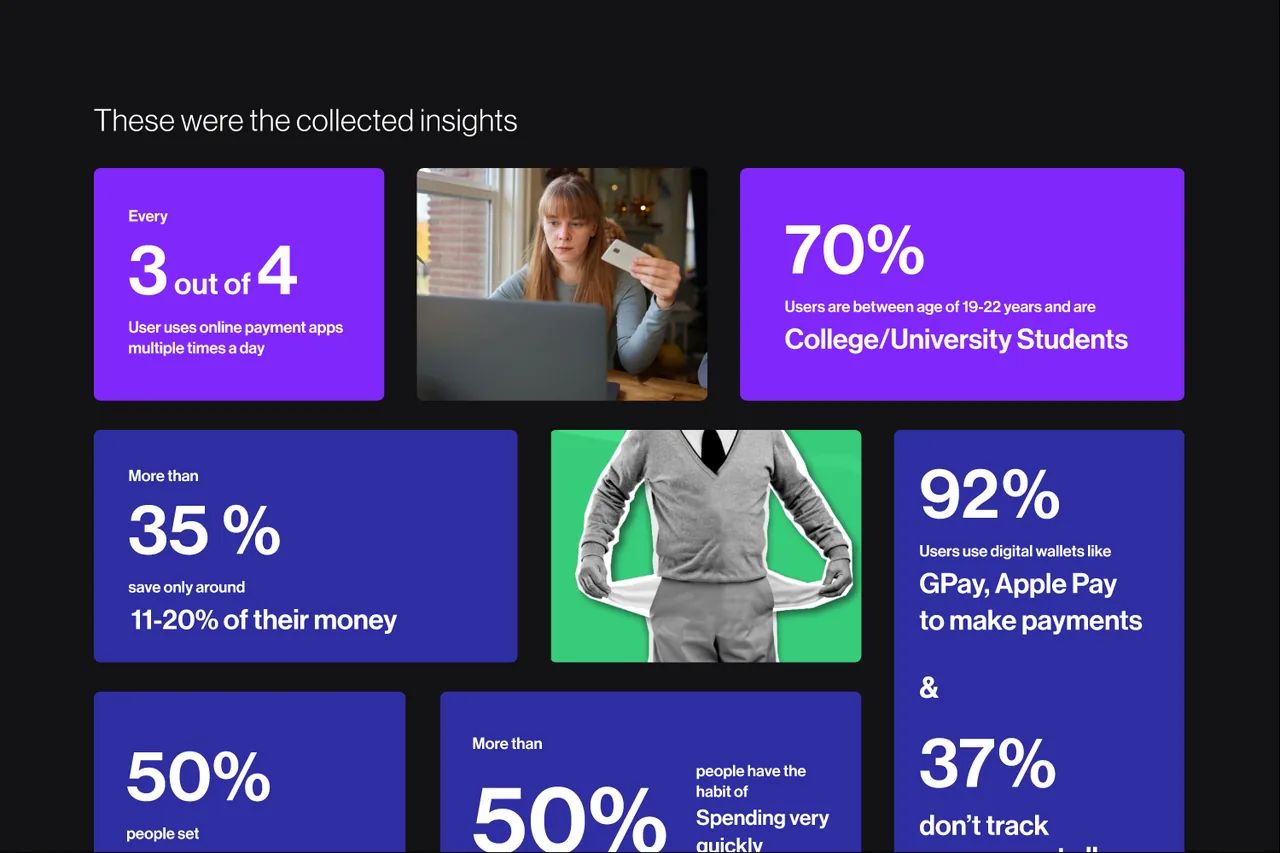
Secondary research and a survey of 110 people, mostly young adults, showed the gap. 92% pay with digital wallets, three in four use payment apps several times a day, yet 37% don’t track expenses and half spend quickly. The primary persona is an 18-year-old student, new to the city, who wants to keep up with friends without worrying about running out of money.
Rather than adding game mechanics for their own sake, the team analysed Fyp, FamPay and Junio through the Octalysis framework, looking at all eight core drives of motivation. That analysis set the scope: each proposed feature answers a specific drive, from group goals for social influence to saving pots that use the fear of loss.
The problem
Young adults are new to digital payments and money of their own, often with little financial education. Impulse spending, weak budgeting and debt follow quickly.
- 110people surveyed, mostly young adults
- 92%pay with digital wallets like GPay and Apple Pay
- 37%don’t track their expenses at all
- 24%don’t set financial goals
How it moved
Starting with the data
Secondary research on teens and young adults showed apps replacing cards, while very few people were actively saving.
Listening to users
The survey and interviews built a picture of a first-year student who wants to enjoy college and keep up with friends, without constantly worrying about running out of money.
Scoring the competition
Fyp, FamPay and Junio were each assessed against the Octalysis gamification framework, core drive by core drive, to find what motivates people and what was missing.
Designing for motivation
Every gap became a feature mapped to a core drive, so each game mechanic had a reason to exist beyond looking playful.
What the research changed
- The target isn’t people who dislike money; it’s people new to it, with little financial education.
- Peer pressure drives overspending, so social features can work for saving as well as against it.
- Competitors offered rewards, but little sense of story, progression or real ownership.
- Motivation frameworks turned a vague idea of being fun into a testable feature scope.
What the app does
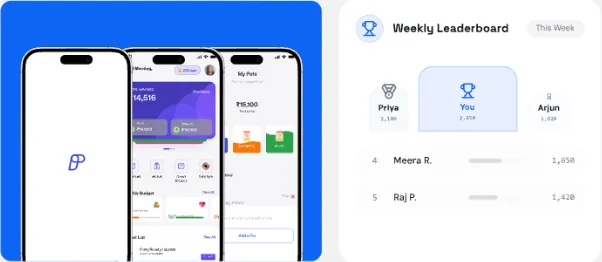
- Streaks and badges that reward saving habits.
- Saving pots you fill up and only break once the goal is met.
- Group goals and collaborative challenges for trips with friends.
- A daily spin that gives people a reason to come back.
- A wishlist that links what you want to what you’ve saved.